- Building A Successful Shopify App
- Posts
- BSSA #133 - Save the date for The Wide Event
BSSA #133 - Save the date for The Wide Event

Mat De Sousa
December 24, 2025
Hello there, last email before 2026 already.
Damn, almost 6 years working on my Shopify App WideBundle 🤯
In today’s email we’re going to talk about:
Date for The Wide Event and sponsorships
The MVP is not “a small product”
The future of The Wide Event
Let’s go! 🔥
Grow your Shopify App from $0 MRR to a 7-figure EXIT
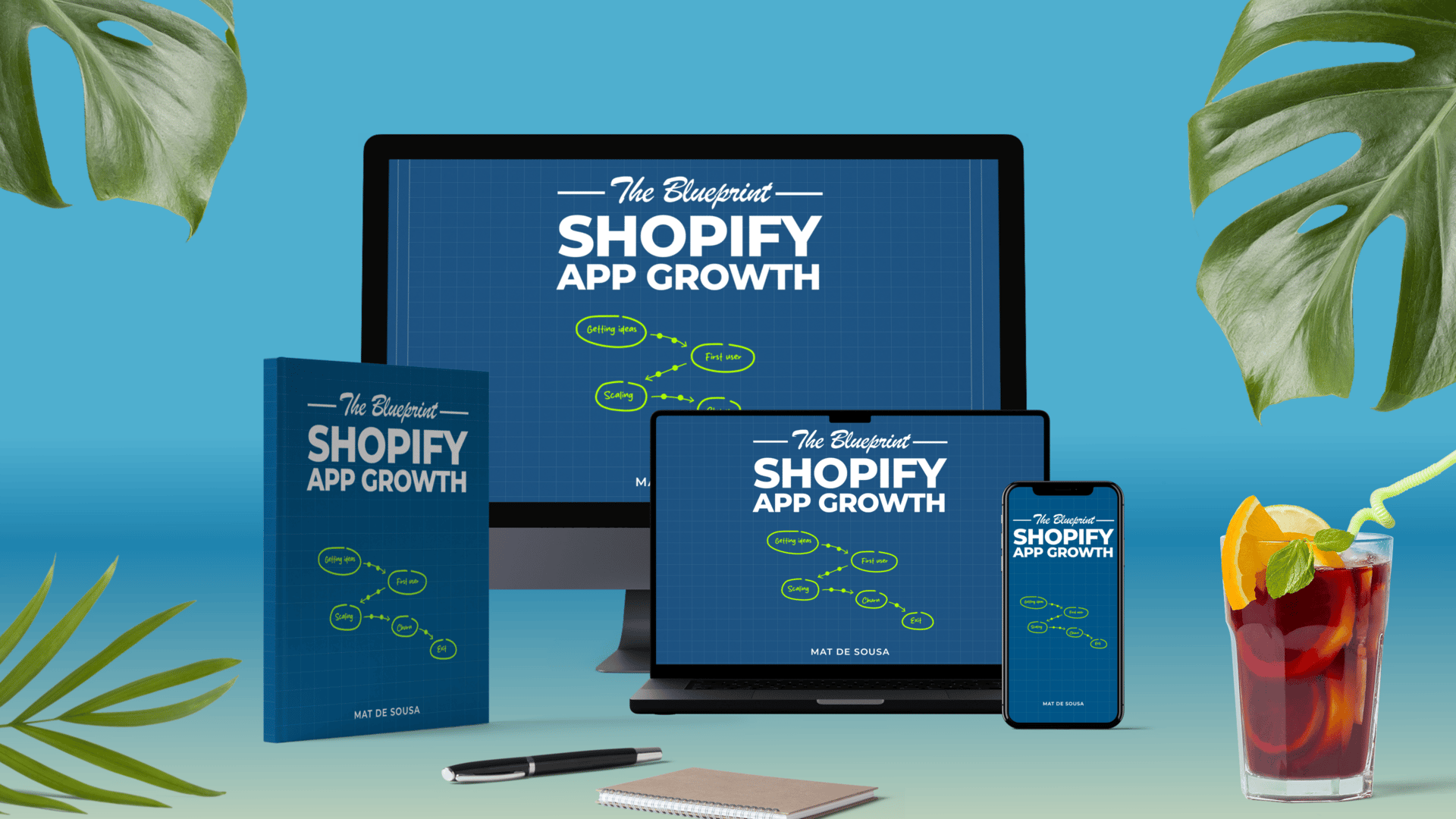
If you want to get the whole theory on how to grow a successful Shopify App from $0 MRR to a 7-figure EXIT, grab the Shopify App Growth Blueprint.
Date for The Wide Event and sponsorships
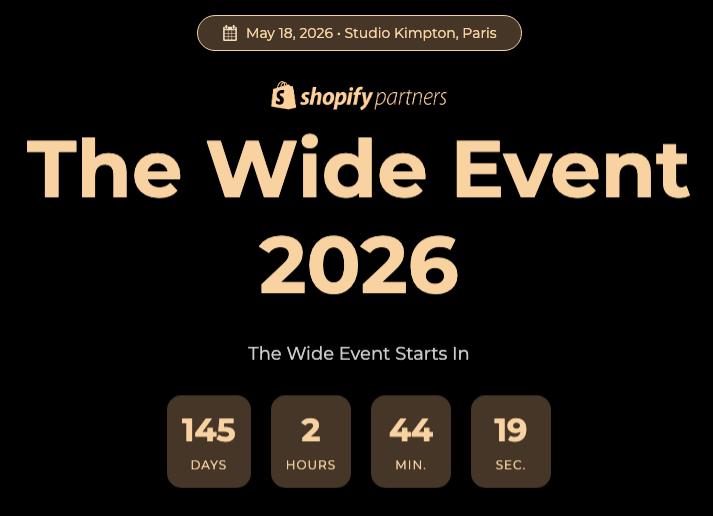
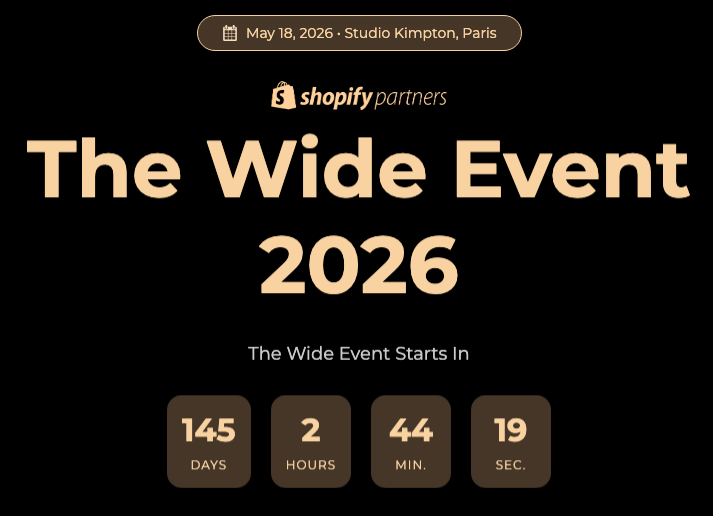
Save the date: May 18th, 2026.
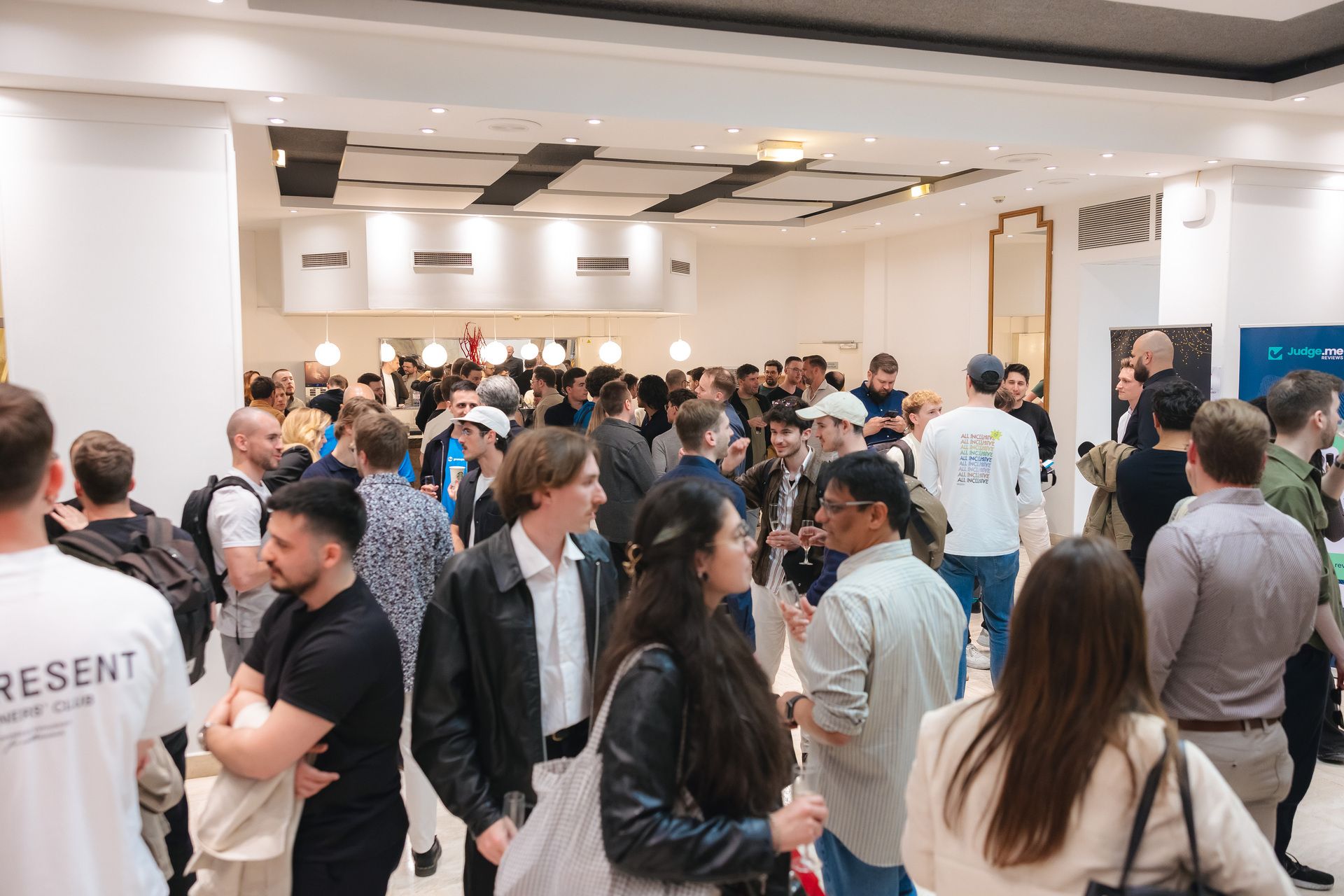
The Wide Event is coming back in Paris and this year we’re upgrading (again)
First, we’ll have 250 people (50 more people than last year).
But last year, we had 30 people on the waiting list and many others told me they were waiting for that edition after hearing about the past ones.
I don’t want the event to grow too fast. I want to go step-by-step to have the best event as possible.
So, May 18th, 2026, starting from 5:30 pm until midnight (Paris Time).
In the meantime. I am looking for 8 sponsors for this event. (Half spots already taken)
If you’re willing to sponsor it, please reply to this email with your company (to know who will sponsor and ensure we won’t have competitors). I will then send you the sponsorship details.
The MVP is not “a small product”
I was talking with a founder recently, and we ended up spending a lot of time on one topic: the MVP.
What surprised me is that most people still misunderstand what an MVP really is. They think MVP means a smaller version of the product, like the same product but with fewer features. But the truth is a bit deeper than that.
MVP means Minimum Viable Product. It is the most basic version of your app that is still usable. Not “nice.” Not “complete.” Not “polished.” Just usable.
And the easiest way to understand it is to stop thinking in terms of features, and start thinking in terms of usability.
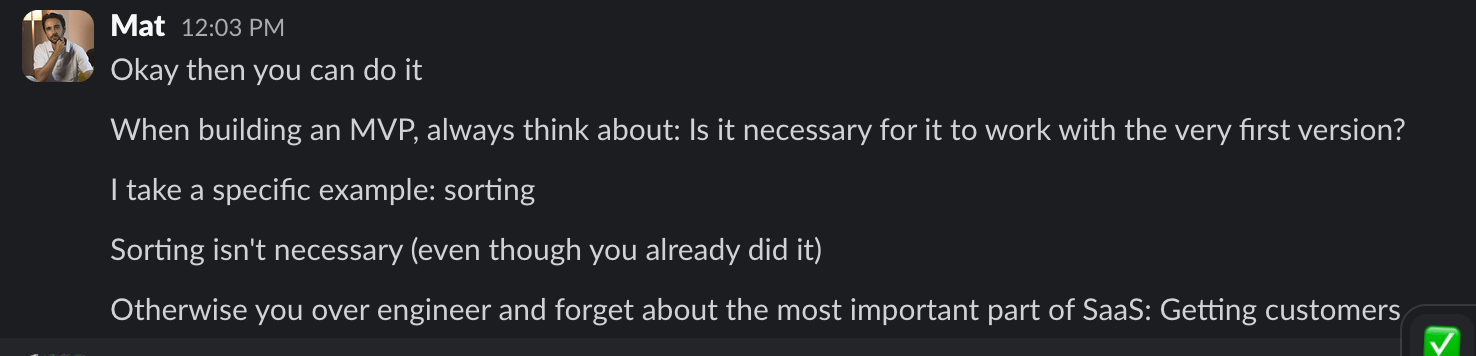
A very simple test is this: if you remove a feature, is the product still usable?
There is no maybe. It is either yes or no.
If the answer is yes, that feature is not part of the MVP.
For example, a classic SaaS feature is “change your password.” People expect it eventually, sure. But you do not need it to use the product. You can still demo the product. You can still deliver the core value. So it is not MVP. It is a future improvement.
Same thing for many “comfort” features founders love to add.
Let’s take a Shopify app example. Imagine you are building an app that lets merchants create upsells. A founder might think, “We need a sorting system so users can sort upsells by newest, oldest, and so on, because they will get lost later.”
Is it useful? Yes.
Is it necessary to use the app? No.
So it is not MVP.
This is exactly what I kept repeating during the conversation with that founder. He would show me what he was building, and I would say: we want an MVP. We want a usable version. Then he would add another feature that he believed was “necessary,” and I had to stop him again and say: no, remove it. It is not required for the product to work.
And this is not about being strict for fun. It is about speed.
The real purpose of an MVP is to be built quickly so you can test the market. An MVP is not here to impress users. It is here to answer one question: is this product useful?
The moment you add too many features, two things happen.
First, you increase development time.
And every extra week you spend building is a week you are not doing the real job, which is getting users.
Second, you add complexity. You create more screens, more decisions, more places where users can get lost. Then you end up saying, “My onboarding is bad” or “People don’t understand my app,” when in reality, you created that problem by overbuilding.
A better approach is to ship a very simple version quickly, then let users tell you what is missing.
If users start saying, “I’m getting lost in my upsells,” that is great. That means they are actually using the product. Now you can add sorting, but you will add it with real feedback, and you will design it with your users.
That is how a product becomes good.
Most developers struggle with MVPs because they want things to be perfect. They want to ship something they personally feel proud of. But your goal is not to impress yourself. Your goal is to learn as fast as possible.
A good trick is to add constraints on purpose. Tell yourself: I have one week to build this, not more. Now ask: if I only have one week, what are the features I absolutely need so the product works?
Not “nice to have.” Not “better UX.” Not “it would be cool.” Just usable.
If you cannot demo it without a feature, maybe it belongs in the MVP.
If you can demo it without a feature, remove it.
This is also why it is so important to focus on the core problem you are solving. When your problem is clear, the simplest version of your product can already solve a big part of it.
Think about it like this. If the main reason people want your app is one clear thing, then your MVP only needs to deliver that one clear thing.
If you believe your app is useless without building a big complex system, that is usually a sign of a deeper problem. It often means you did not pick a problem that is clear enough. You did not go deep enough on what actually matters to the user.
Because when the problem is real and well defined, a simple product is enough to get people interested, test, and give feedback.
That is what an MVP is really about.
Not building a small product.
Building the fastest usable version of the solution, so you can learn, iterate, and grow without wasting months in your code editor.
The future of The Wide Event
I created The Wide Event back in 2018. At the time, it was a small French event, very local, very simple, and mostly focused on bringing together people from the ecosystem without really knowing yet what it could become.
In 2022, I decided to make a big change and hosted the first English edition. That was a turning point, because it completely shifted the direction of the event and the kind of people it could attract. At first, it was still mainly for Shopify merchants, but quite naturally, the event started opening up to the rest of the ecosystem.
Today, The Wide Event brings together merchants, agencies, developers, app founders, theme founders, and more generally anyone building something around Shopify. And from the beginning, my ambition was never to create just another business event where you listen to talks, exchange a few business cards, and leave. I wanted something bigger, something people would actually remember.
But you cannot create something incredible from day one. You do not have enough people yet, you do not fully understand what attendees expect, and you do not know what will really work once people are in the room. Just like building a Shopify app, you have to go step by step, ship a first version, observe how people react, and improve year after year.
In 2023, we had around 100 people. In 2024, 150 people. In 2025, 200 people. So logically, for 2026, the goal is 250 people. And the goal is not to stop there. I want The Wide Event to keep growing and eventually reach 2,000 people.
But that also means one thing: we cannot repeat the same format every year and expect it to scale forever. For example, today, each sponsor can speak for three minutes on stage. It works well at our current size, but if the event keeps growing and we need more sponsors, this model will not scale. We simply cannot have too many sponsors speaking on stage without breaking the rhythm of the event or making it feel endless.
So every year, I ask myself the same questions. What do we change? What do we improve? How do we keep the same spirit while making the event bigger?
My vision for The Wide Event has always been clear. I want it to be one of the best events in the Shopify ecosystem, not only because of the quality of the speakers or the content, but because of the experience as a whole.
Most events follow the same recipe. You have good talks, interesting topics, and some networking. That is fine, but it is also very predictable. What I want is something different. I want people to come even if they are not deeply involved in the ecosystem, simply because the experience feels unique and memorable.
I want The Wide Event to feel like more than a business event. I want it to feel like a show, something where you can learn, meet people, and at the same time have a genuinely great time. I want people to talk about it years later, not only for what they learned, but for how they felt being there.
That is why every year we try to add new elements. When I look back, 2024 was clearly better than 2023, and 2025 was better than 2024. For 2026, we want to go even further. We have more ideas, we understand better what people enjoy, and we know more clearly what worked and what did not.
At the same time, I am honest with myself. Can we always increase the level of experience? At some point, it might cost more money. At some point, it might require completely new formats. These are real questions, and this newsletter is also here to share those thoughts with you, not just the finished story, but the process behind it.
So I want to ask you directly. If you have ideas for The Wide Event, whether they are simple or completely crazy, I want to hear them. You can reply to this email, send me a message on LinkedIn, X, or in the Facebook community. I genuinely want to understand what people actually want.
If we continue in this direction, mixing learning with experience, content with a real show, business with something memorable, what do you think we should add? What would make you say, “I cannot miss this event”?
My long-term goal is simple. I want The Wide Event to become so important that tickets sell out in a day, not because I am hosting it, but because the event itself has become something people do not want to miss.
I do not know exactly when that will happen. Maybe in five years, maybe in ten. It does not really matter. I love hosting events, even if it is exhausting, and it has become a real part of what I do and who I am.
I am not making money with it today, but I believe it can become something bigger, something that exists on its own. One day, I want people to come to The Wide Event not because of me, but because of the experience, the people, the energy, and everything that makes it special.
That is the direction I want to take.
 | The Shopify App Growth BlueprintIf you want to get the whole theory on how to grow a successful Shopify App from $0 MRR to a 7-figure EXIT, grab it now! |
Thanks for reading!
I’ll see you in the next email, in 14 days. Until then, take care!
Mat.